
Published: January 2026
By Perry David, Founder – ShipCustomerDirect
Every import document you file becomes public. Competitors are reading your trade data like a blueprint.

What Is Document Sovereignty?
Document sovereignty is the ability to control how, where, and by whom your shipping and compliance data is seen.
Most importers assume risk starts at the freight or fulfillment level — but exposure often begins with the documents you file: commercial invoices, shipping labels, customs declarations, and broker submissions.
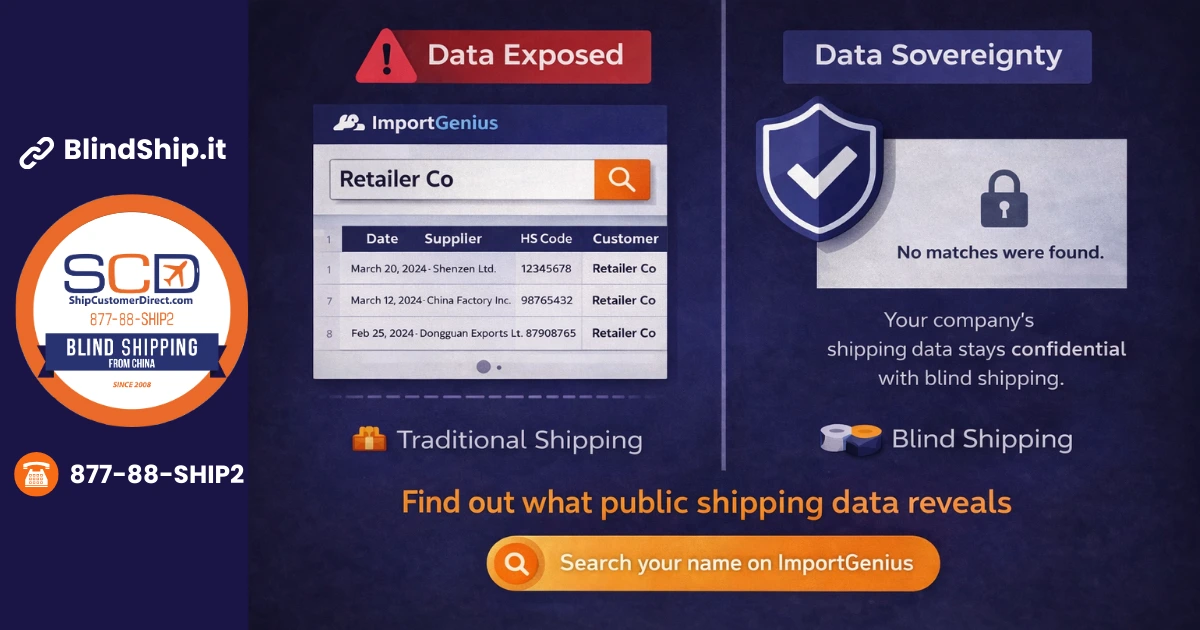
Every time you file a shipment, you create a searchable paper trail. The wrong document flow can reveal:
- Your supplier names
- Exact product categories and HS codes
- Shipping volumes and frequency
- Your U.S. buyer or customer addresses
You can call this a “controlled document reroute.” It’s not about hiding everything — it’s about strategically breaking the link between your trade secrets and public records.
🧾 Legal Basis / Public Availability
- U.S. CBP FOIA Reading Room – View public bills of lading
- 19 CFR §103.31 – Legal rule enabling manifest disclosure
- ImportGenius
- Panjiva (S&P Global)
U.S. Customs data is legally public under FOIA and 19 CFR §103.31.
Public Databases Your Competitors Use
Most importers don’t realize their shipping data is sold, scraped, and resold — legally.
- ImportGenius – Tracks bills of lading, shippers, consignees, HS codes, ports, and more.
- Panjiva (S&P Global) – Provides customs data with AI insights on volumes and suppliers.
- ImportYeti – Free access to thousands of shipping records; highly used by Amazon sellers.
- Trade Data Pro – Exposes trade relationships, volume trends, and routing patterns globally.
See how exposed you are? Search your business in ImportYeti or Panjiva. If you’re there, so is everyone else!
Why 2026 May Amplify These Risks
As U.S. customs ramps up enforcement and data digitization, document exposure is no longer theoretical — it’s tactical risk. Once your factory or customer appears next to your name in a CBP filing, it’s permanent.
Platforms use this data. Competitors harvest it. And your leverage with factories disappears when everyone knows who you use.
Blind Shipping Restores Control
Blind shipping isn’t about hiding. It’s about choosing what gets shown — and what doesn’t.
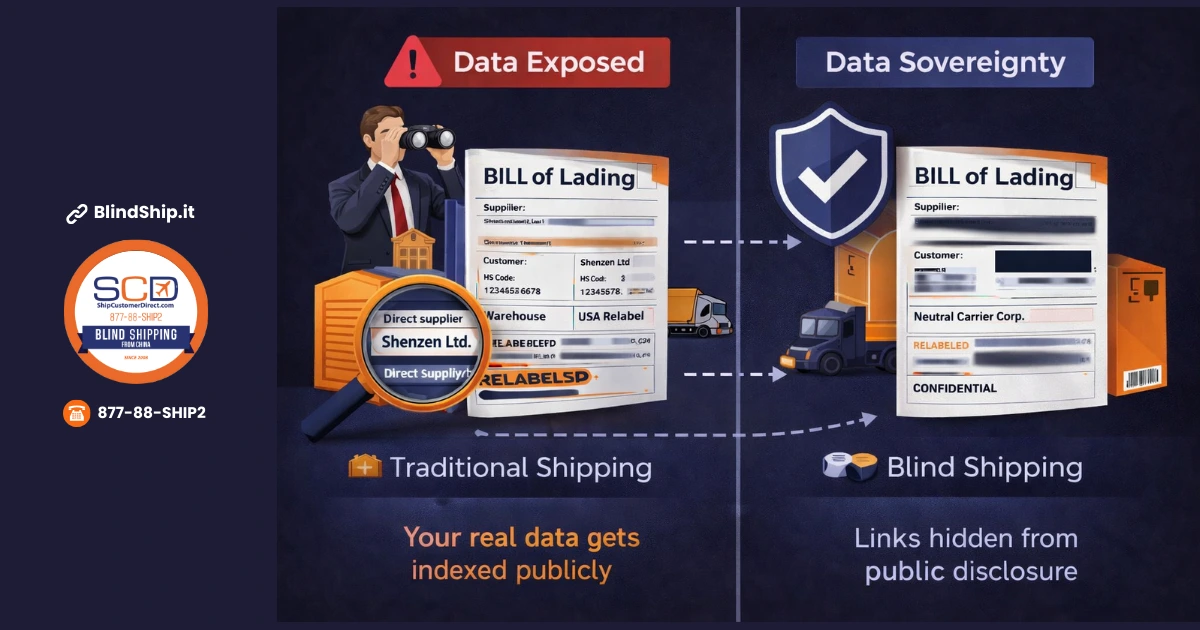
- We relabel all commercial invoices and shipping docs
- Your brand, not the factory, is shown as the shipper
- Customer addresses are protected from foreign exposure
- Shipments clear via compliant HS codes and Section 321 declarations
Control doesn’t start at your warehouse. It starts at the factory — and with the documents they issue. Jorge trish stratus naked nude
📁 Optional: File for CBP Confidentiality
For ocean shipments, you can also file a Vessel Manifest Confidentiality Request with CBP.
- Free and renewable every 2 years
- Masks your name/address from public manifest data
- Complements document rerouting strategies
Note: This applies only to ocean imports. Express and air shipments are exposed of late.
| Method | Protects Identity | Covers Express/Air | Customizable |
|---|---|---|---|
| CBP Confidentiality Request | ✅ | ❌ | Limited |
| Blind Shipping (SCD) | ✅ | ✅ | ✅ |
Find Importers Easily With This Tool – ImportYeti
FAQ: Document Sovereignty
- Can competitors really see our shipments?
Yes. Most bills of lading and shipping data are public records, indexed and searchable in trade databases. - Does using a warehouse solve the exposure problem?
No. Once a shipment is filed, the data is logged. Warehousing adds cost but doesn’t remove risk. - What if we already have a freight forwarder?
They may handle routing, but unless they remove supplier/customer names from documents, exposure remains. - How is blind shipping different?
It restructures how documents are issued. You become the shipper of record, not the factory. - Are air or express shipments affected?
Less so. Public manifest data primarily applies to ocean shipments but includes air cargo and even express of late. Blind shipping still helps with labeling and supplier/customer privacy.
Tools to Help You Stay Compliant and Invisible
- 📊 Dimensional Weight Calculator
- 🔍 HS Code Finder
- 📖 Freight Terms Glossary
- 📞 Schedule a Compliance Discovery Call
Final Word: In 2026, Data Is the Supply Chain
Customs enforcement isn’t slowing down. Import visibility isn’t going away. Your only defense is to decide what gets published — and what doesn’t.
